
This year, one of the world's largest sporting events will sweep across North America in a long wave of stadiums, travel and emotion. For many travelers, the tournament will be a global celebration worth savoring, and also a reminder of how rarely the pace lets up. The Brando offers more than an escape from that intensity. About 30 miles north of Tahiti, in the Windward Islands of the Society Archipelago, it offers a sanctuary: a private atoll where guests can balance the excitement of the competition with the deeper need to slow down, reconnect and experience French Polynesia in a preserved and meaningful form.
Getting there is part of the shift. Air Tetiaroa operates a roughly 20-minute flight from a dedicated private terminal at Tahiti Faa'a International Airport. The atoll comes into view as a ring of twelve coral islets, or motu, wrapped around a turquoise lagoon more than two and a half miles wide. The resort itself sits on the 78-hectare Motu Onetahi. A representative greets arriving guests on the runway and brings them to their villa by electric cart. From the first minutes, the rhythm is different.
A Retreat Built for Slowing Down
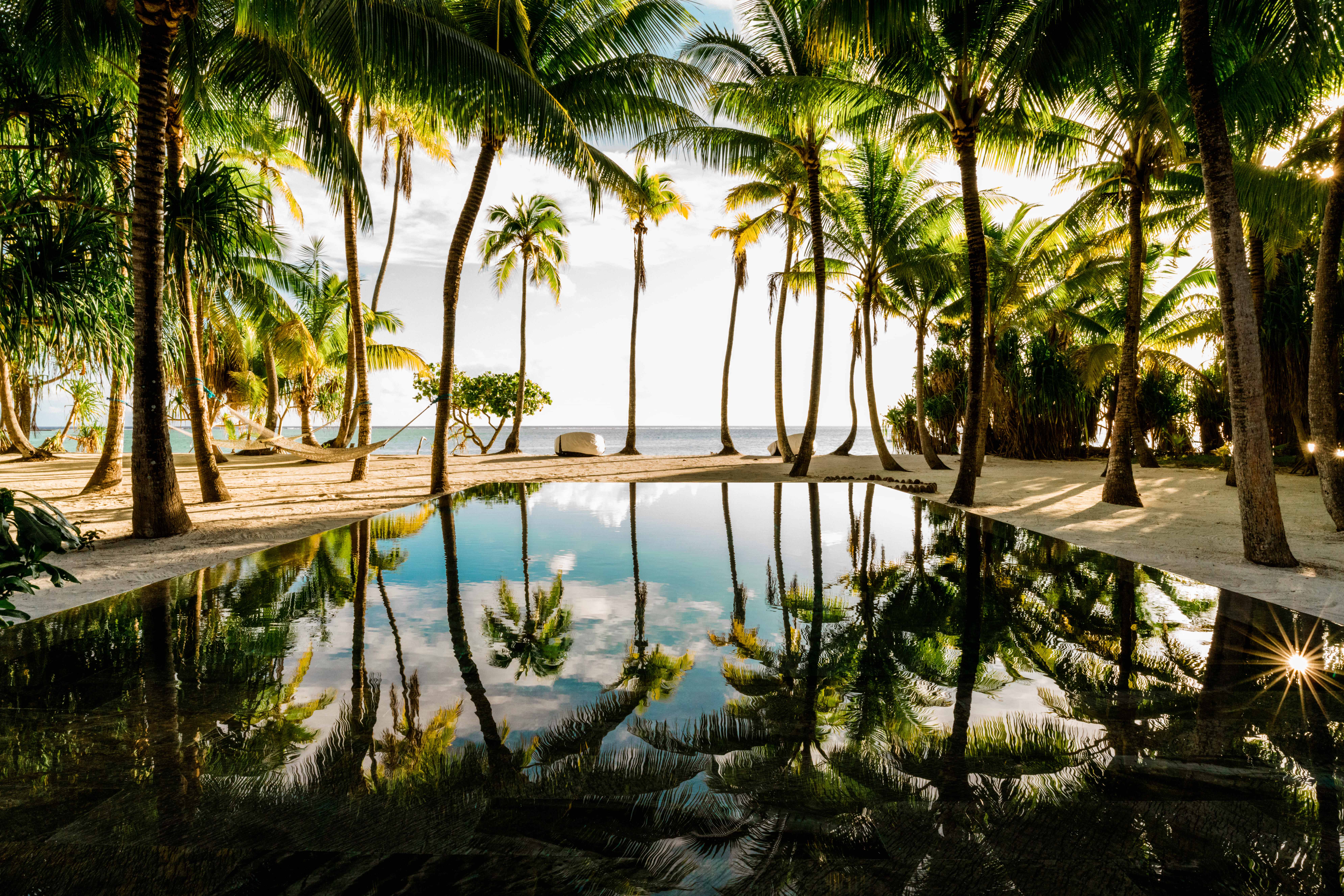
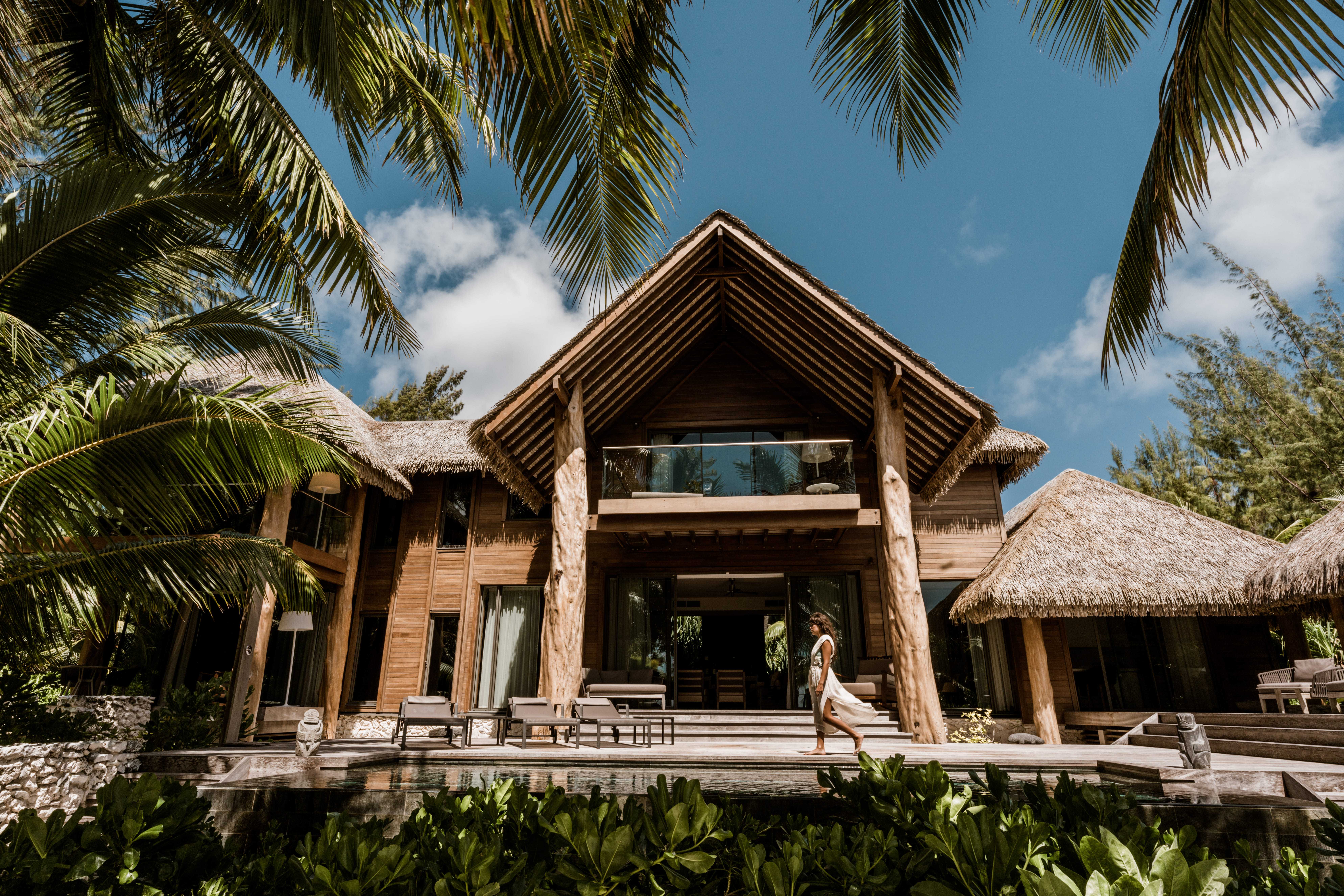
The Brando works well as a place to decompress, whether for couples marking an occasion or families traveling together after weeks of high-energy plans. Space, silence and privacy are the foundation here, and they are abundant. The resort has 36 private villas with one to three bedrooms, plus the three-bedroom Teremoana residence, each opening onto a garden, a private pool and the white sand beyond. Wooden walls and roofs covered with pandanus leaves draw on traditional building methods. The intent is a sense of seclusion that lets guests set their own pace.
Wellness at The Brando extends well beyond any single building. The lagoon can be explored by traditional outrigger canoe, kayak, paddleboard or simply with a mask and snorkel, and naturalist-guided boat tours introduce the fauna and flora of the different motu. On land, there are nature walks, a fitness room open around the clock and a tennis court. Meals lean on fresh produce grown on the atoll, served across the Beachcomber Café, the fine-dining Les Mutinés and the Nami teppanyaki room. Time outdoors, shared meals and unhurried days do much of the restorative work on their own.
At the center of the wellness experience is the Varua Te Ora Polynesian Spa, a destination in itself set within a 2,000-square-meter oasis of exotic plants. Its holistic treatments are inspired by Polynesian traditions and the natural elements of the island. Couples can discover Taurumi, a traditional massage understood as both therapeutic and spiritual, intended to restore internal harmony. The spa's Fare Manu, or bird's nest, treatment cabin sits in the trees about 20 feet above the ground, overlooking a freshwater lake covered in lotus flowers. After the intensity of a tournament summer, it is a setting designed for recovery and reconnection.

Sustainability Woven Into the Stay
What distinguishes Tetiaroa is not only its beauty but the way the resort is built to help protect it. The Brando was conceived by the late Marlon Brando and hotelier Richard Bailey around the idea that hospitality and the preservation of a fragile island could reinforce one another. Guests do not simply stay in a protected setting; they take part in the work of keeping it that way. That is the rare privilege The Brando offers: the chance to experience a protected place with purpose. The property holds LEED Platinum certification for its low-carbon construction.
The clearest examples are practical ones. The Brando operates the first Sea Water Air Conditioning system in French Polynesia, drawing cold water from roughly 3,000 feet below the surface to cool its buildings and reducing the energy required for air conditioning by close to 90 percent. More than 4,000 solar panels run along the airstrip, covering about 75 percent of the resort's energy needs, and solar water heaters supply nearly all of the hotel's hot water. Rainwater recovery covers a significant share of the resort's water use, ornamental plants are irrigated with wastewater, the organic garden is irrigated with rainwater, and an extensive waste management program sorts material across more than 25 lines, crushing used glass into sand for the paths and turning food waste into compost.
Conservation here is anchored by Tetiaroa Society, the non-profit partner that runs research, education and restoration on the atoll. Its work spans green sea turtle monitoring, shark ecology studies, coral and lagoon protection, invasive-species eradication and archaeological mapping of cultural sites. An on-island ecostation hosts visiting scientists, and the resort's Green Tour lets curious guests see the research firsthand. The society's education programs have reached thousands of local students, using the atoll as a classroom. On Tetiaroa, tourism, science and conservation are designed to work together rather than in tension.
Culture as Part of the Experience
Polynesian culture gives the stay its depth. Tetiaroa is not simply a private island; it carries real historical weight in French Polynesia. The Pomare family, the royal line of Tahiti, kept it as a private residence long before Brando encountered it during the filming of Mutiny on the Bounty and purchased it in 1966. The atoll still holds vestiges of marae, the temples built by its early residents, and Polynesians continue to regard it with particular respect.
Guests meet that heritage through people and place rather than display. A team of cultural hosts introduces the Tahitian language and a range of activities, from traditional weaving to song, dance and local instruments. Polynesian culture also runs through the resort's architecture and its weekly performances, and traditional sports appear during festive seasons such as Heiva. The Explorer Center offers a library and conversations with cultural leaders and naturalist guides.
Underpinning all of it is the Polynesian relationship between people, land and ocean, a connection that gives the experience its meaning. Approached this way, culture is not a separate activity but a living thread, grounded in authenticity, respect and a strong sense of place. For travelers stepping off the momentum of the tournament, The Brando offers a different kind of arrival: a chance to slow down, reconnect and return home with a deeper sense of balance.


