
1. What inspired you to create Bora Bora Sea Salt and Tahiti Sea Salt, and how did your entrepreneurial journey begin in Bora Bora?
Fabienne Bratschi: I’m originally from Switzerland, and about 14 years ago I moved to Bora Bora, to a small motu, what we call a tiny island in the lagoon. I started asking around what didn’t yet exist locally, and someone mentioned that there was no salt production.
At first, I had no knowledge at all. But when my father, who is an engineer, came to visit, we decided to experiment. We dug a small basin, filled it with seawater, and ten days later we had sea salt. It fascinated me, just water, sun, and wind, nothing else, and you get these beautiful salt crystals.
We tested the salt in a laboratory, and it turned out to be extremely pure and rich in minerals. That’s when I started, very slowly, just one small production basin, producing about two kilograms per month. From there, it grew step by step.
Jean-Pierre Saab: After a few years, Fabienne had built a strong local presence, working with hotels and restaurants. Then came COVID-19, and tourism stopped, which meant the local market collapsed.
That’s when we met. I was working as a Food & Beverage Director in a hotel in Bora Bora, and we decided to collaborate to develop exports. At the same time, we saw a report about two sisters on another island who had invested in salt production but were about to shut down due to the lack of tourists.
We reached out to them and proposed working together. That collaboration led to the creation of Tahiti Sea Salt, transforming individual efforts into a broader, more structured project for both local development and international export.
2. Can you describe the traditional harvesting process and what makes your sea salt unique?
Fabienne Bratschi: Our process is entirely natural. We use artificial basins because we cannot disturb the coral ecosystem. The seawater is placed in these basins and left under the sun and wind, no additives, no removal of minerals.
Everything is done by hand. At the end, we even clean the salt with tweezers. Because we don’t industrially refine it, the salt crystals vary in size. When used in cooking, smaller crystals melt while larger ones create a unique crunch.
Another key aspect is purity. Some of our salt comes from extremely remote islands like Puka Puka, where fewer than 100 people live and there is no tourism. That means no pollution, no sunscreen contamination, just pristine ocean water. We also create blends with local ingredients like vanilla and chili, all handmade and organic.
Jean-Pierre Saab: We work with elevated tables instead of the ground to protect the environment. Seawater is pumped directly into these tables without energy-intensive systems. After about two weeks of evaporation, we begin harvesting the crystals daily. Because we don’t wash the salt, it retains high levels of magnesium and calcium, which enhances both flavor and nutritional value.
3. What were the main challenges of building this business in such a remote region?
Fabienne Bratschi: Logistics is a major challenge. Everything must be imported, first to Tahiti, then shipped to Bora Bora, and finally transported to the motu. This process can take months and is very costly. Weather conditions also affect transport, sometimes delaying both materials and finished products.
Jean-Pierre Saab: Another challenge was market perception. As the first salt producers in the region, we had to convince people to buy local salt, even if it’s more expensive than imported alternatives.
We also faced administrative hurdles, salt production didn’t clearly fit into existing categories like agriculture or fishing, so we had to help define our industry within the local regulatory framework.
Exporting is another difficulty. For example, it was sometimes cheaper to ship our salt from France to Los Angeles than directly from Tahiti due to logistics constraints.
4. How did you build a premium brand around a natural product like sea salt?
Fabienne Bratschi: It starts with the product itself, quality comes first. Then we invested heavily in design, packaging, and branding. We test everything carefully and never compromise on quality or identity. Even when business opportunities arise, we sometimes say no if they don’t align with our brand values.
Jean-Pierre Saab: We also collaborate with renowned chefs. For example, Anne-Sophie Pic, one of the most awarded chefs in the world, uses our products because of their quality. These partnerships validate our work and help position our salt as a gourmet ingredient. We also create unique products, like champagne-infused salt, driven by passion and creativity.
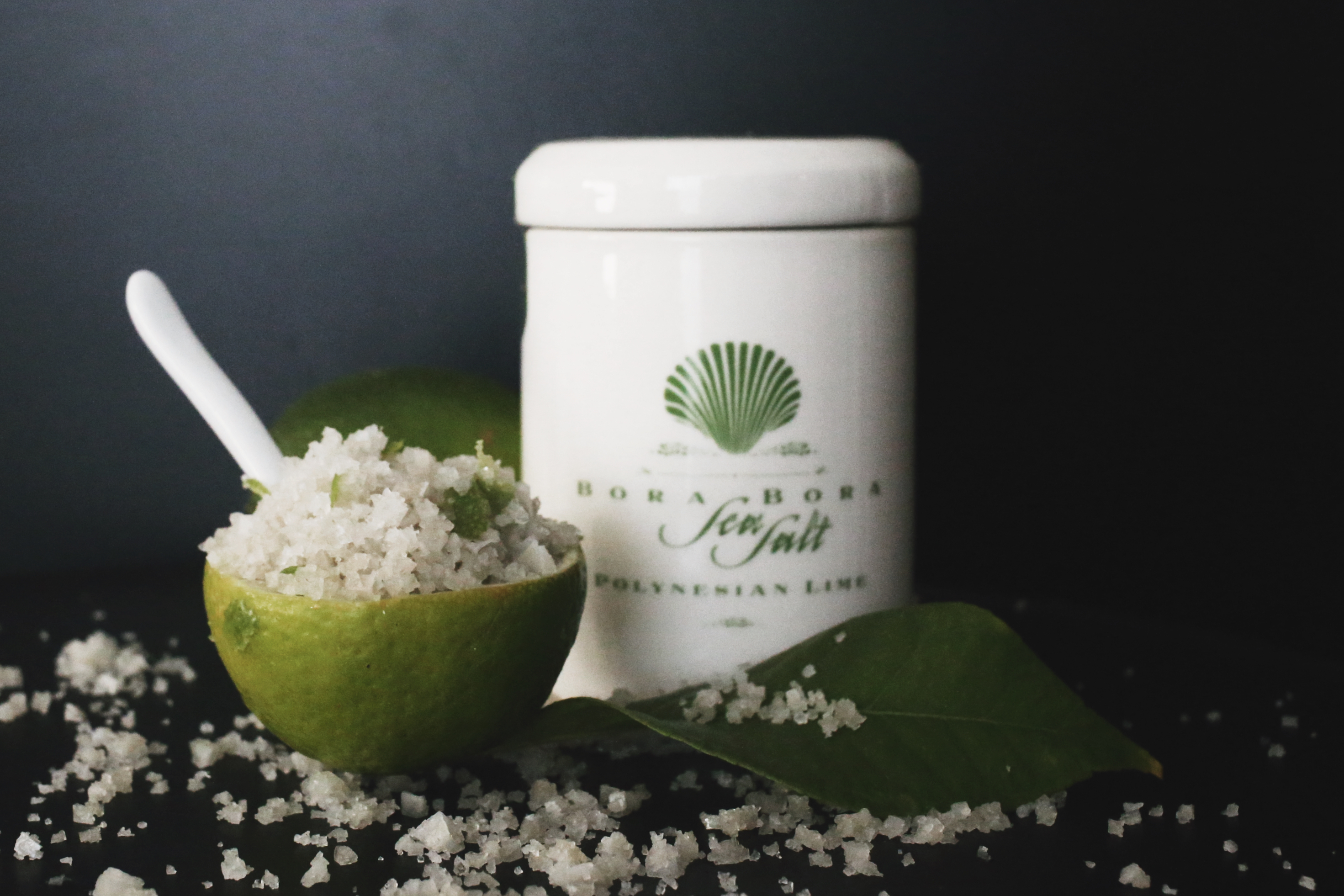
5. How are chefs and luxury establishments using your salt?
Jean-Pierre Saab: Being from Bora Bora already adds a dreamlike appeal. When chefs include “Bora Bora Sea Salt” on a menu, it enhances the story and the experience. Combined with the artisanal process and authentic Polynesian ingredients, it gives chefs a unique, high-quality product that stands out in fine dining.
6. Are you expanding beyond gastronomy?
Fabienne Bratschi: Yes, we’re developing wellness products such as body scrubs made with monoi oil, bath salts, and a sea salt hair spray for “beach waves.” These are already available locally and will soon expand further.
7. How do you ensure environmental sustainability?
Fabienne Bratschi: Our process is entirely manual and low-impact, so it naturally protects the environment.
Jean-Pierre Saab: We also support local communities by helping families set up small salt production units. We provide training and guarantee to purchase their production. Additionally, we are developing educational initiatives and opening our site to visitors to share knowledge about salt production and its cultural history.
8. Are you seeing growing demand internationally, particularly in the United States?
Jean-Pierre Saab: Yes, especially in California. However, scaling production and managing logistics remain challenges. We need strong local distribution partners to grow effectively in the U.S. market.
Fabienne Bratschi: We’re already exporting to about 14 countries, including France, Germany, Australia, and Japan. The U.S. is a key market for future expansion.
9. What message would you like to share with Los Angeles Times readers?
Fabienne Bratschi: If you can, visit French Polynesia, it’s a truly unique and authentic place. If not, we can still bring a piece of it to you. A simple pinch of our salt carries the essence of Bora Bora, the sun, the ocean, and the culture, right to your table.
We are also always open to developing new partnerships and points of sale in California, so if any readers are interested in working with us, we warmly invite them to reach out.
Finally, I would like to thank Air Tahiti Nui for their continued support over the years. As an ambassador, I’m proud to be associated with an airline that helps connect our islands to the world and supports local initiatives like ours.


