
1. Could you introduce the role of the Cook Islands Ports Authority and explain its strategic importance for the economy of the Cook Islands?
Thank you for taking the time to come here, and welcome to the Cook Islands and to our authority. The Cook Islands Ports Authority serves as the main gateway for goods entering the country. We handle about 97% of all imports, which shows just how strategically important the port system is for our economy.
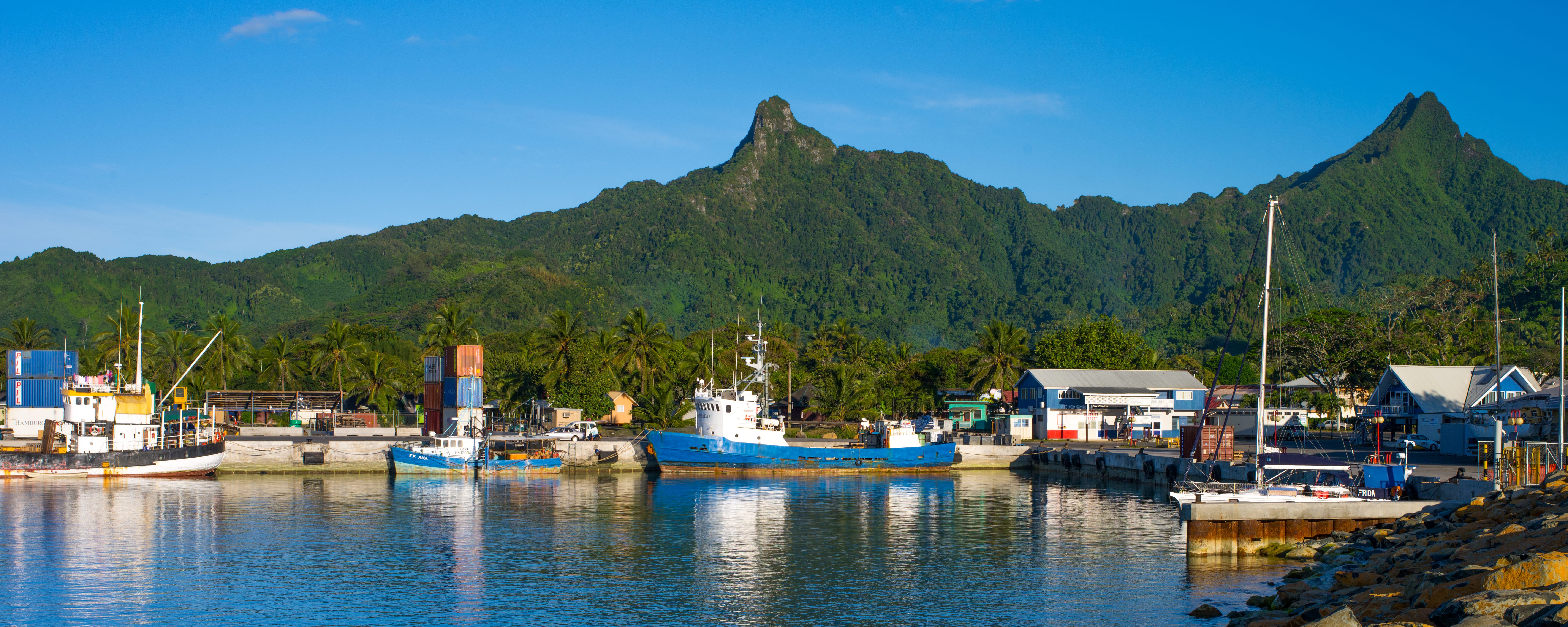
We also facilitate supply and connectivity for the outer islands. The Cook Islands consists of 15 islands in total, and 14 of those are inhabited. International cargo ships call primarily at Rarotonga and Aitutaki, and both ports are managed by the Cook Islands Ports Authority. From there, domestic vessels transport supplies to the outer islands. Our role is essentially to ensure that goods, supplies, and resources reach communities across the entire country.
2. In a geographically dispersed island nation, how do ports support trade, tourism, and inter-island connectivity across the Cook Islands?
Tourism drives much of our economy, and there is a strong correlation between the volume of cargo we receive and the number of tourists visiting the islands. Many of the goods imported into the country are directly linked to supporting the tourism industry, which is the Cook Islands’ primary economic sector.
From a tourism perspective, the ports also support cruise ship visits. Our cruise season runs roughly from August to May. Cruise ships call at both Rarotonga and Aitutaki, and occasionally at other outer islands. However, one of our constraints is that we do not have dedicated cruise ship wharves. Ships must anchor offshore and transport passengers to land via smaller tenders. This reflects a key infrastructure limitation: our port facilities are not large or deep enough to accommodate cruise ships alongside the dock.
For the outer islands, connectivity is a priority. We provide additional support to ensure equity across the country. For example, we waive certain marine and berthing costs for domestic vessels serving outer islands to avoid increasing the cost of delivering essential goods. While operators still pay for facilities such as warehouse or cargo shed space, reducing port fees helps keep supply chains affordable for remote communities.
3. How do you manage trade and cargo logistics in the Cook Islands?
The Ports Authority handles 100% of the sea cargo entering the country. The Cook Islands is primarily an import-based economy, so most of the goods arriving here are consumer goods, building materials, food supplies, and equipment. Very little is exported; in fact, most outbound containers are empty.
International cargo ships call mainly at Rarotonga and Aitutaki. Both ports have facilities capable of handling the current volume of imports. Distribution to the outer islands is carried out by two domestic ferries that transport goods purchased from local wholesalers and hardware suppliers in Rarotonga. These shipments include construction materials, food, and other essential supplies.
4. What infrastructure modernization projects are currently underway to increase capacity and operational efficiency?
One major project has been underway in Aitutaki for the past three years. The project involved widening and deepening the main channel to improve safety, expanding the operating basin around the wharf, and increasing the hardstand area for cargo operations. This work is close to completion, and it will allow larger domestic vessels to berth directly at the wharf instead of transferring cargo to smaller barges.
In Rarotonga, we face different challenges. The port entrance is only about 54 meters wide, which makes navigation difficult for larger ships, particularly in strong currents. We are currently exploring options developed by a consulting firm in New Zealand to widen the entrance and improve navigational safety. These plans also include expanding certain operational areas and improving the turning basin for larger vessels.
However, these upgrades would require significant investment, potentially tens of millions of dollars, and funding remains a major challenge.
.jpg)
5. Tourism, particularly cruise tourism, is growing across the Pacific. How are you upgrading port facilities to accommodate this trend?
In Aitutaki, we have separated cruise ship operations from cargo handling areas to create a more dedicated and visitor-friendly environment. In Rarotonga, our current setup works adequately for tender-based cruise ship visits.
Ideally, we would like cruise ships to berth alongside a pier. We have identified a potential development area for this, but building such infrastructure would require an investment of roughly $100 million. At the moment, that level of funding is beyond our reach.
6. Ports are critical to supply chain resilience. How do you ensure the reliable flow of essential goods?
Over the past three years we have invested heavily in upgrading our cargo handling equipment. Because we manage the movement of all cargo coming off ships, equipment reliability is crucial. If machinery breaks down, the entire supply chain is affected.
We also work closely with a stevedoring company that unloads cargo and provides haulage services to move containers off the wharf. In addition, the Cook Islands participates in regional trade facilitation systems involving customs, immigration, and shipping agencies. These systems streamline clearance processes and improve efficiency across the entire supply chain.
7. What opportunities exist for international partnerships or investment in port infrastructure?
There is significant potential for international investment in port development. Our geographic size and location present limitations, but expansion toward the sea could allow us to accommodate larger vessels and bring cruise ships alongside.
Another emerging area of interest is seabed mineral exploration. Research vessels regularly operate in our waters, and the number of visits from scientific and exploration missions is increasing. With sufficient infrastructure development, the Cook Islands could potentially become a regional hub for these activities.
8. Sustainability is a key concern for island nations. How do you balance port development with environmental protection?
Environmental protection is central to everything we do. The Cook Islands has strong environmental regulations, and any development project must undergo rigorous environmental approval processes.
For us, the ocean, what we call the Moana, is fundamental to our culture and livelihood. Tourism depends on healthy reefs, clear lagoons, and vibrant marine ecosystems. Development and environmental protection must go hand in hand. Protecting our natural environment ensures that it will remain intact for future generations.
9. How are the Cook Islands positioned within the broader South Pacific in terms of regional connectivity and trade?
In many ways we are at the eastern edge of the Pacific trade routes. Cargo ships typically depart from Auckland, travel through Fiji and Tonga, and then arrive in Aitutaki and Rarotonga before returning to New Zealand.
We rely heavily on imports from New Zealand, Fiji, and Samoa. While we do not export large volumes of goods, these trade relationships are essential to sustaining our economy.
10. What are the main operational and financial challenges of managing port infrastructure in such a remote island environment?
One major challenge is limited revenue. The Cook Islands has a small population, and our economic activity is closely tied to tourism. When visitor numbers fluctuate, so does cargo volume and port revenue.
We also face ongoing financial obligations from past infrastructure investments, which limits our ability to fund new developments. Another challenge is access to specialized technical expertise. In a small island community, there are relatively few engineers, lawyers, or technical specialists available locally.
Additionally, because our suppliers are mainly based in New Zealand, obtaining spare parts or technical support can take time. If critical equipment fails and the parts are not available locally, it may take days or weeks for replacements to arrive. As a result, we must invest heavily in spare parts inventories, maintenance programs, and staff training to ensure operational continuity.
11. Finally, what message would you like to share with Los Angeles Times readers about the Cook Islands as a destination?
We would love to welcome more Americans to the Cook Islands. It truly is an island paradise. While we are geographically remote, we are actually quite well connected. We are about five hours from Hawaii, four hours from New Zealand, and only an hour from Tahiti.
The Cook Islands may be small in terms of landmass and population, but we consider ourselves an important and vibrant part of the Pacific region. Our tourism industry has grown significantly, particularly in Rarotonga and Aitutaki, and there are valuable lessons that other Pacific nations can draw from our experience.
At the Ports Authority, we have many ideas for the future. While funding constraints remain a challenge, we remain committed to improving our infrastructure and continuing to serve the people of the Cook Islands.


