
1. How do you position your boutique properties as intimate and authentic alternatives to large luxury resorts in Moorea?
Our two boutique hotels are intentionally intimate. Rather than competing with large-scale hospitality, we offer a different approach centered on human experience, proximity to nature, and genuine connection with our guests.
Our model is built on proximity, to nature and to our guests. It’s about human connection, slowing down, and reconnecting with the natural environment. Because we operate on a small scale, we provide highly personalized service. We anticipate our guests’ needs even before they are expressed. That attention to detail and anticipation is what truly differentiates us from larger hotels.
2. Moorea is gaining visibility internationally. In your view, why are more travelers choosing Moorea over other Pacific destinations for its accessibility, natural beauty, and relaxed atmosphere?
It’s exactly for all those reasons. What makes Moorea unique is its immediacy. When you arrive in Tahiti, you’re just an hour away by ferry from the city, and yet when you reach Moorea, you feel completely removed, far away on the islands of Tahiti.
The presence of nature here is extraordinary. It is not staged or artificial; it is simply present. You are absorbed by nature. Guests are immersed in it naturally, and that sense of immediacy is increasingly rare today.

3. Your hotels operate on a small-scale model. How does direct involvement from ownership and management enhance the personalized guest experience?
Operating boutique hotels on a small island in the middle of the Pacific is always more complicated than elsewhere and requires commitment and humility. Supply chains are longer, and staffing requires long-term investment.
Moorea has around 20,000 residents, so you don’t automatically find hospitality-trained professionals. We invest heavily in training. Fortunately, the people here are passionate and enthusiastic, which makes a big difference.
Operating a small independent property is a very different experience from working within a global hotel brand. Our scale allows us to remain closely connected to the island and its community, ensuring that hospitality here remains personal, local, and rooted in its environment.
We focus on inclusion and career growth. We try to create meaningful opportunities for local talent, and that strengthens both the guest experience and the island’s sustainable development.
4. What are the main operational challenges of running boutique hotels on an island, particularly in terms of staffing, supply chains, and seasonality, and how do you maintain consistent quality?
Consistency is critical for a small hotel like ours. The guest experience depends on it.
The biggest challenges are supply chain logistics, staffing, and seasonality. That’s why discipline and anticipation are essential. We cannot afford to be reactive, we must anticipate. We plan ahead for seasonal fluctuations and staffing gaps. Everything has to be structured carefully.
Maintaining quality here requires foresight, organization, and constant attention.
5. Today’s travelers increasingly seek authenticity and meaningful experiences rather than standardized luxury. How have you adapted your offer to meet these evolving expectations?
What travelers are looking for today is exactly what we are already doing. This new generation of travelers seeks authenticity, human connection, and sustainable experiences.
People want calmness, attentiveness to detail, and the feeling that their needs are anticipated without having to ask. Today, true luxury is no longer defined by grand lobbies or infinity pools, but by silence, time, intimacy, and the ability to slow down.

6. Sustainability is essential in fragile island ecosystems. What concrete initiatives have you implemented to protect the lagoon environment and reduce your environmental footprint?
We are not perfect, but we are taking meaningful steps.
We have removed plastic bottled water and installed filtered water fountains. In the bathrooms, we use refillable dispensers with locally made shower gel and shampoo. Our soaps are homemade and plastic-free.
Sustainability also comes through staff training and encouraging guests to respect the environment and the local community. The way visitors interact with the community is just as important as environmental protection.
7. How significant is the American market, especially visitors from California and the U.S. West Coast, for your properties, and have you observed changes in their booking behavior?
Americans represent around 50 percent of our guests, primarily from the West Coast. Accessibility plays a major role, direct routes from Los Angeles and San Francisco make it very convenient and competitively priced.
We’re also seeing more visitors from the U.S. East Coast and Canada. Many are drawn by the fact that French Polynesia remains relatively untouched compared to destinations like Hawaii. They are seeking a more human-scale, authentic Polynesian experience.
8. In a competitive environment that includes global hotel brands and iconic destinations such as Bora Bora, how do you preserve your independence, charm, and local identity while remaining competitive?
We are not competing on the same scale. The difference lies in atmosphere, privacy, and guest experience.
Because we are independent, we have creative freedom. That independence allows us to innovate and to maintain our authentic, local identity.
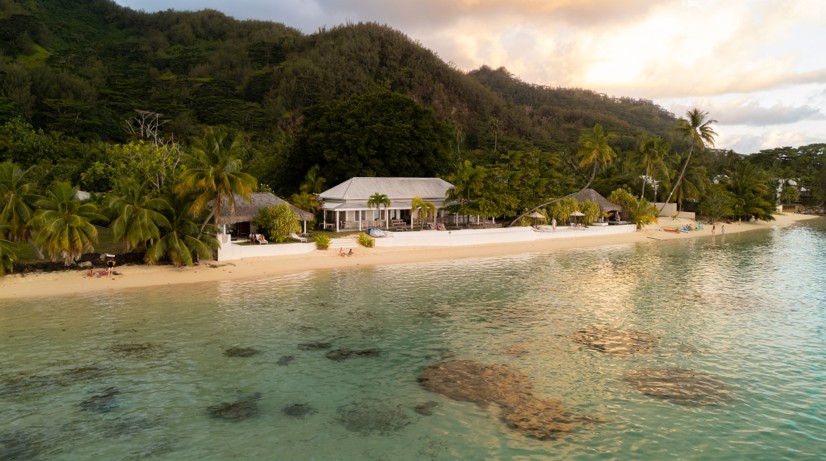
9. What is your vision for the future of tourism in Moorea in terms of controlled growth, authenticity, and long-term sustainability?
We must be very careful with development. Moorea is still well preserved, and nature here is both present and fragile.
The lagoon and the Pacific Ocean are not simply a backdrop, they are the foundation of tourism. Controlled, measured growth is essential to preserve the island’s character, environment, culture, and community.
Growth is welcome, but it must be responsible, thoughtful, and balanced in order to protect what makes Moorea special.
10. Finally, what message would you like to share with readers of the Los Angeles Times about discovering Moorea as a refined yet authentic island escape?
Moorea is not a destination to consume quickly. It is a place to slow down, reconnect with nature, and experience hospitality at a human scale.
If you come to Moorea with respect and curiosity, the island will give back generously.


